SINCERE Training Session at CHNT 31
Listen to the fountain / the voice(s) of the Schönbrunn
11-13 November, 2026 @ Vienna, Austria
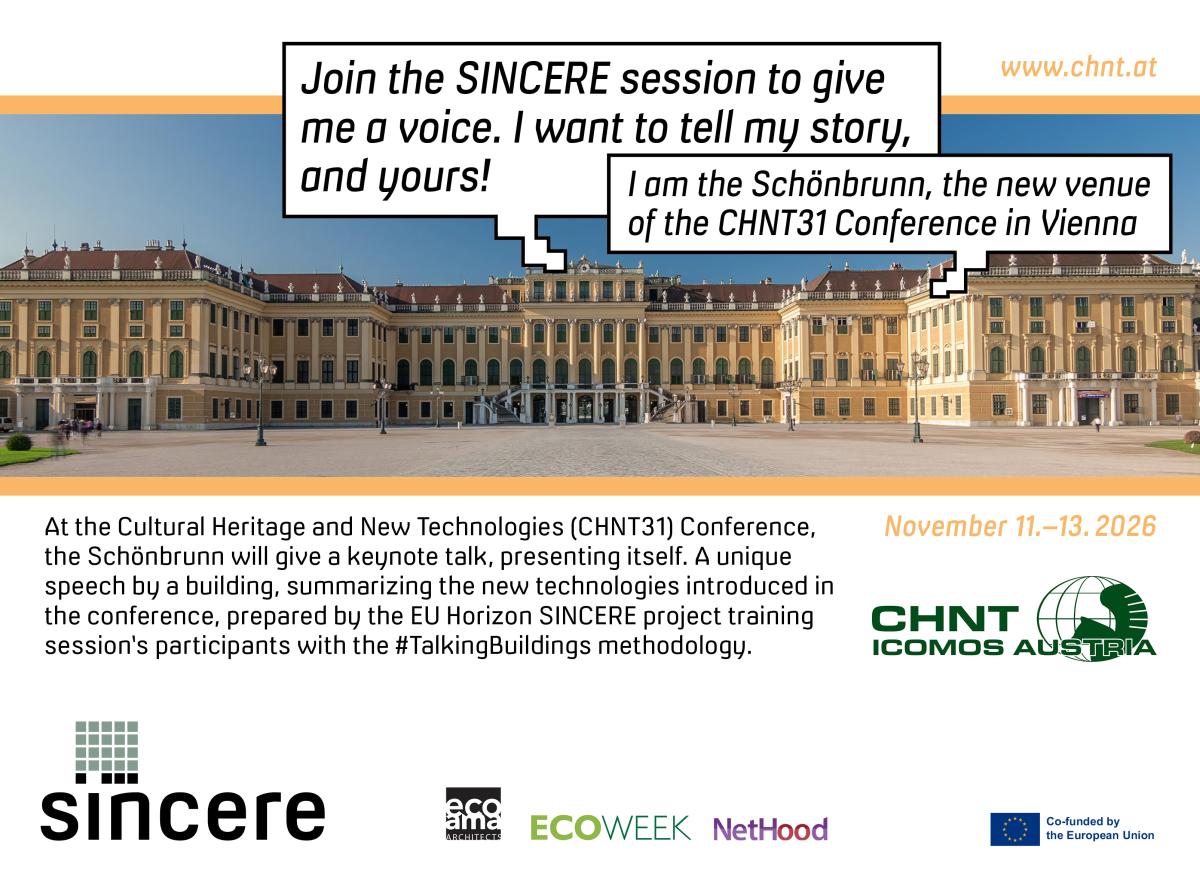
The SINCERE training session at the Cultural Heritage and New Technologies (CHNT31) conference will activate the #TalkingBuildings tool to give Schönbrunn a voice for a keynote talk, presenting itself. A unique experience, bringing together the application of advanced technologies and methodological tools, in a very playful and engaging context.
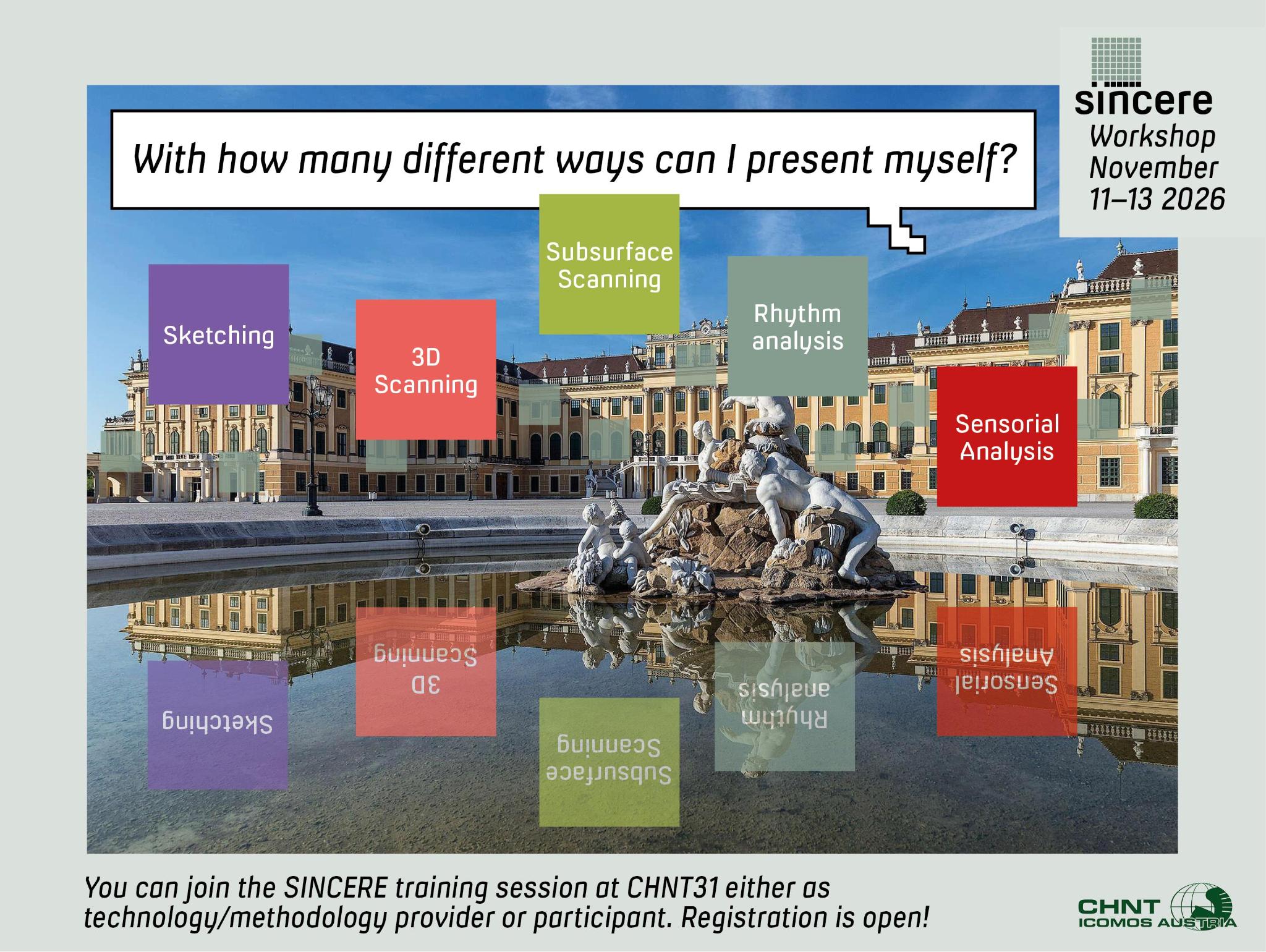
In addition to advanced technological ways to visualize the physical characteristics of a building using specialized tools like 3D scanning with LiDAR scanners, subsurface scanning with ultrasonic tomographers, thermal cameras, among others, we will explore numerous approaches in understanding a building though intangible means. From ethnography to >architectural sketching, from activating our human senses to employing our imagination, from documenting lived experiences to understanding history. From storytelling, to mathematics.
In his famous 1947 book Exercices de style, Raymond Queneau tells one very simple story 99 different times in 99 distinct literary styles and constraints. In this workshop we will try to produce as many ways as possible that a building can talk presenting itself. Are you in for the challenge?
Registration
You can join us at the beautiful Maria-Theresia room either as a technology / methodology provider, adding one more voice to the CHNT31 conference's venue, or as a participant learning to use the introduced tools and methodologies in practice, during the conference.
The number of participants in the training session is limited. Please express your interest by email to info@chnt.at (Subject: Registration Training “Listen to the fountain”).
> Check all the details at the main conference's web site
Discovering the different voices of a building
Here is the current list of technologies and methodologies that you can experience during the training session:
3D Scanning
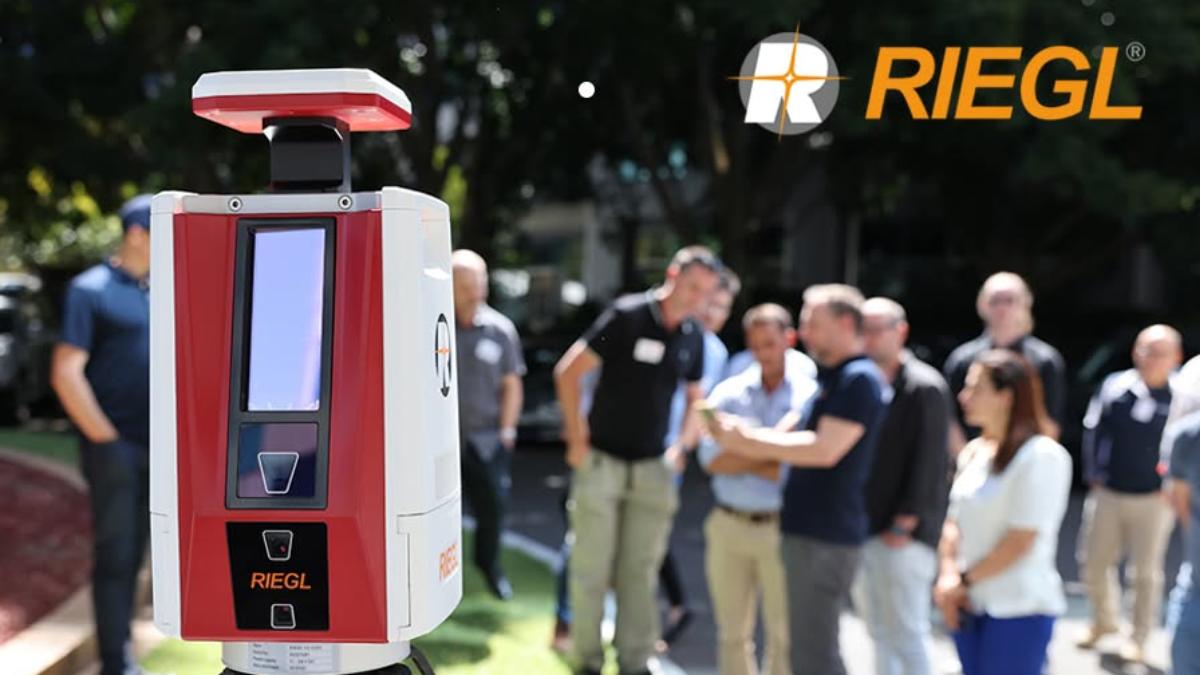
Session participants will have the chance to use high-end equipment from RIEGL experts providing advanced LiDAR technology (3D scanners), pre-processed material, and training to perform on-site digital scanning of selected areas of the venue in different scales.
LiDAR is a powerful technology for precisely measuring and digitizing the physical world. Laser scanners capture the surfaces of individual objects or entire landscapes using a dense array of LiDAR measurement points. These points form what is known as a point cloud, which is then processed into a highly detailed and accurate digital 3D representation of the physical world.
Additional support will be offered by experts from GEOS3D, with expertise on software development, with an emphasis on geodetic and industrial surveying, and 4D-IT, offering consulting services and applications with impressive imaging work already performed on the Schönbrunn palace.
Penetration scanning techniques
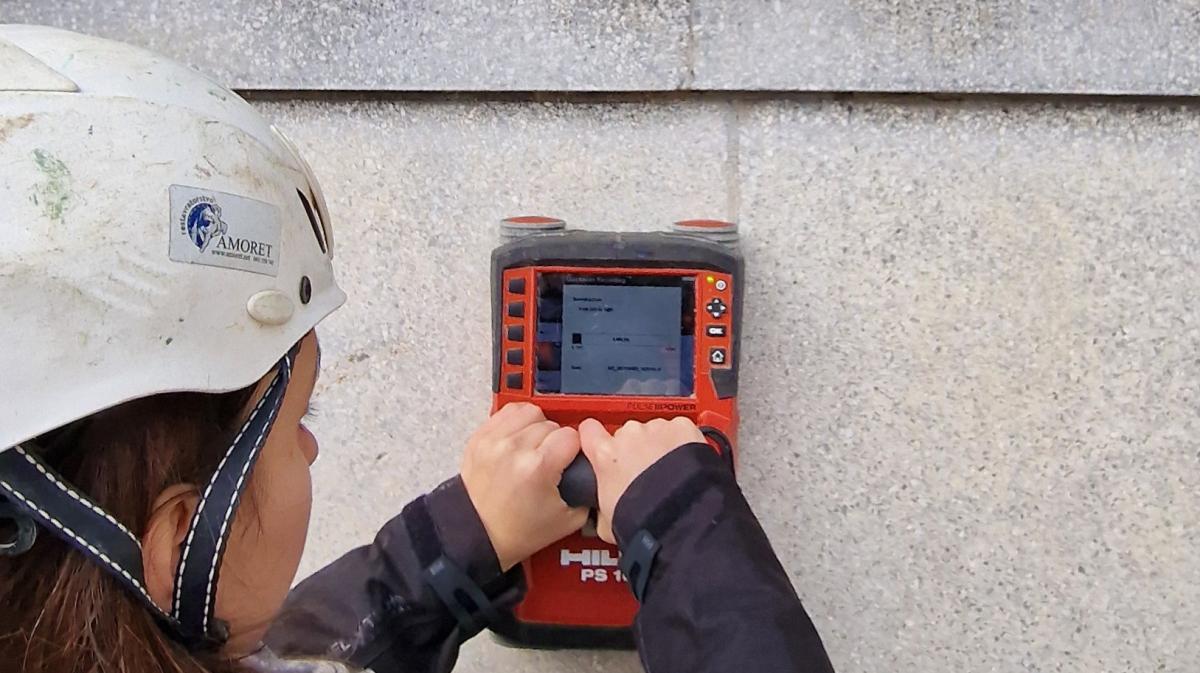
While 3D scanning captures the surface and environment of a building, there are sophisticated tools that allow to perform subsurface documentation through non-invasive penetration scanning equipment like ultrasonic tomographers, thermographic cameras, and ground penetrating radars.
Researchers from ZAG - Slovenian National Building and Civil Engineering Institute will bring their equipment to Vienna and use it with our training session participants to reveal the hidden layers of the Schönbrunn building, that maybe have also a story to tell.
Architectural analysis
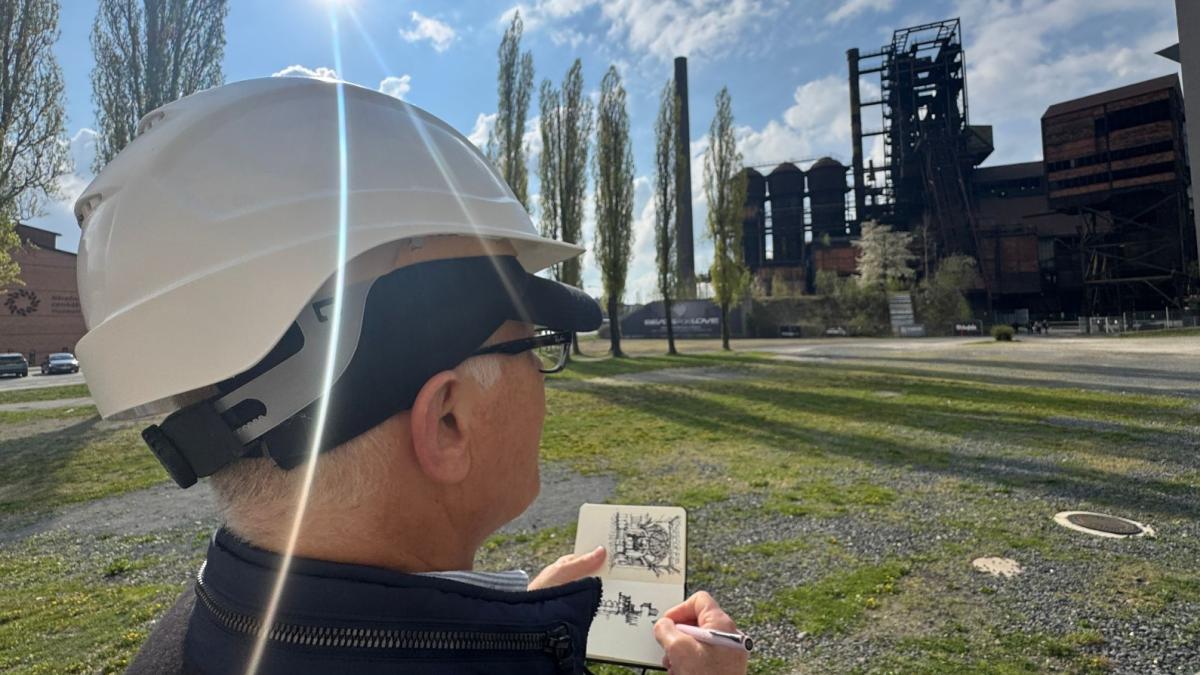
The backbone of a building is its core documentation set formed by architectural plans, cross-sections and facades, guiding the process from design to construction. But there are additional layers that constitute its full body, including the activities that take place, and its connections to the surrounding environment.
In addition to architectural analyses through research of archival material and official plans, we will explore under the guidance of Dr. Elias Messinas (ECOAMA/ECOWEEK) architectural sketching and other artistic visual representation techniques, which can capture the soul of the building.
Sensorial analysis
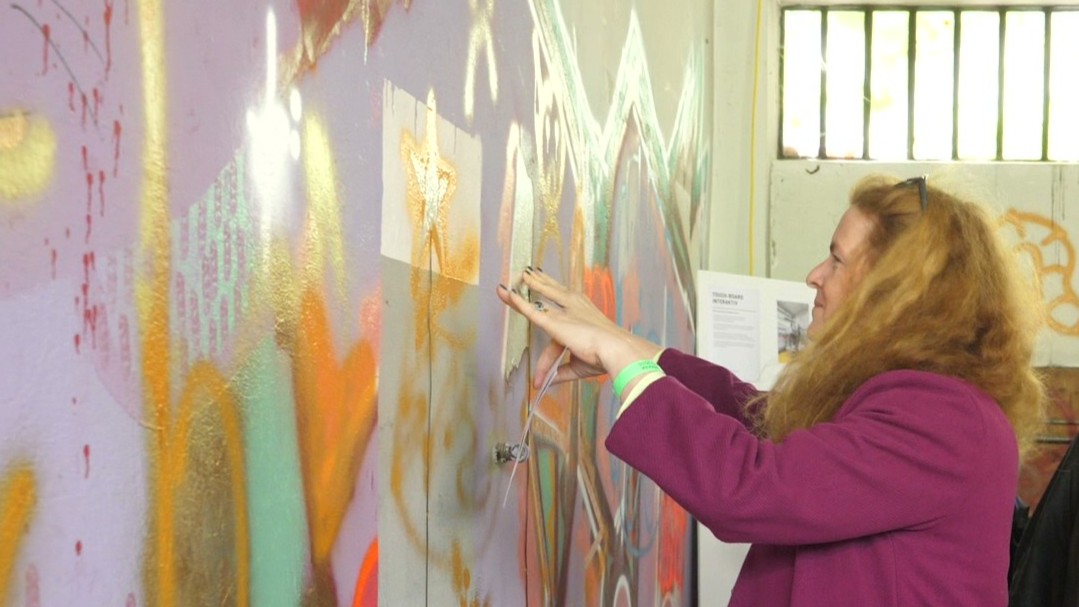
There is more than the vision in understanding and representing buildings. Touch, smell, and sounds add very important layers to the identity of a building, which also have temporal aspects in different dimensions.
In collaboration with Dr. Ruth Mateus-Berr from the University of Applied Arts Vienna, we will build on our previous experience co-organizing the "New Real Senses" workshop at the Design Month Graz, to explore a sensorial approach in understanding a building.
Ethnographic methods
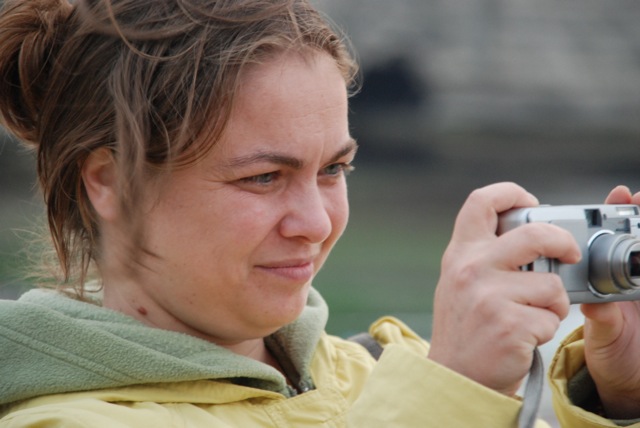
To further discover the place, we'll perform perception walks and participant observation, ethnographic methods that will be introduced by Dr. Ileana Apostol (NETHOOD). During this workshop we'll record its rhythms, document the building, people's presence and uses of it, by means of visual and audio recordings, cognitive mapping or storytelling.
Understanding the building's quality is not only instrumental in spatial orientation or for the reinforcement of emotions already experienced. Together with the interpretation of its lived experience we can open up new possibilities for spatial exploration.
And many more!
The above are just a few dimensions characterising a building. One could imagine a voice of a building expressing the weather conditions, humidity, or air quality around it, detailed material analysis in terms of chemical composition, measurements of its energy profile (U-value), BIM and Digital twin models, sonic landscapes, geomagentic fields, feng shui, imaginary layers performed through storytelling, theater, games, and other artistic interpretations, its organizational structure, important events, its owners, residents, and guests, its accessibility, the documentation of various characteristics in terms of colouring, furniture, windows, art objects, and other elements that form its identity, the natural environment in terms flora and fauna, and many more. And all these could be presented and analyzed on how they have developed in history, how they are in the present, and how they could evolve in the future.
Imagine now collecting all these information layers and letting the building introduce itself with its own "voice", or better voices. In this training session, we will make only a start!
> To join as a technology / methodology provider, please contact us at info@sincere-project.eu
Programme
The training session will span the entire duration of the conference. The exact details will be finalized in the coming weeks.
Day 1 (1 hour in the morning). Introduction to the technologies and tools to be applied during the session and introduction of the #TalkingBuildings methodology as a way to introduce the different ways a building can be represented.
Day 1 (1 hour in the afternoon). Introduction to the venue; formation of small interdisciplinary work groups (up to 5 people each); short warm-up exercise.
Day 2 (up to 2 hours in the morning). Each group will work independently on the selected area in the venue applying their selected tool or methodology toward producing one image and statement for the final presentation.
Day 2 (up to 1.5 hours in the afternoon). Meeting of the session participants; short presentation of progress and feedback.
Day 3 (1 hour in the morning). Integrating materials for the final presentation.
Day 3 (afternoon). Digital Creative Award ceremony of the closing of CHNT31: presentation of the Schönbrunn keynote talk.
Session organizers
Dr. Elias Messinas, ECOAMA/ECOWEEK, Greece
Dr. Ileana Apostol, NetHood, Switzerland
Dr. Lidija Korat Bensa, ZAG, Slovenia
Dr. Panayotis Antoniadis, NetHood, Switzerland
Target audience
Researchers and professionals from fields related to the restoration of cultural heritage buildings: from material engineers to historians, from net zero and passive house experts to user behaviour analysts, from architects to ICT tools developers, from climate modelling scientists to storytellers.
Aiming for a hands-on, experiential and interdisciplinary setup toward:
- Synergies and common understandings of complex issues related to the built cultural heritage.
- Creating bridges between technology-oriented projects - like the Built4People - and community-oriented projects - like the New European Bauhaus.
Context
The EU Horizon SINCERE project organized in 2025 a very successful special session at the ICOMOS Austria Conference on Cultural Heritage and New Technologies - CHNT30, together with its 'sister' EU Horizon projects Inherit, HeriTACE, and FuturHist, on the Sustainable Restoration of Cultural Heritage Buildings.
Within the CHNT31 theme "Getting Dirty – Back to the Roots of Cultural Heritage Work / Heritage in Action: From the Field to the Future" participants of the main sessions are invited to join a hands-on workshop applying exhibited technologies and research methodologies for the venue of the conference, a very special building given a voice!
The TalkingBuildings methodology has been developed in collaboration with various local actors in Rhodes, Ostrava, Samos, and a series of design student workshops. You can get a glimpse of the evolution of this process, and take part, at talkingbuildings.net.
About CHNT
For 30 years, the Conference on Cultural Heritage and New Technologies (CHNT) has served as a premier platform for professionals, researchers, and institutions dedicated to the advancement of cultural heritage preservation through innovative technologies. Founded by Wolfgang Börner and originally organized by Stadtarchäologie Wien, CHNT has grown into a renowned international event, fostering interdisciplinary exchange in the fields of documentation, research, management, and conservation of cultural heritage.
With the transition of CHNT to the National Committee of ICOMOS Austria, the conference is now supported by the Austrian Focal Point for World Heritage at the Federal Ministry for Arts, Culture, Public Service, and Sport.