


Journals
Conferences
Posters

Journals
A. Rubio-Aguinaga, L. Kyriakou, J.M. Fernández, Í. Navarro-Blasco and J.I. Álvarez. (2025). Sustainability of PCM-lime mortars for heritage retrofitting: Carbon footprint and impact on energy demand across climates . Case Studies in Construction Materials, 23, e05294, 2025.
ecent research on PCM–lime mortars has predominantly addressed material-scale behaviour or single-climate cases, with limited integration of embodied carbon and operational energy at the building scale—particularly for heritage envelopes under conservation constraints. To address this gap, the present study develops a climate-resolved, building-scale assessment that couples cradle-to-gate embodied impacts with operational energy effects for PCM-enhanced lime mortars in heritage retrofitting. [...] Simulations reveal that PCM-enhanced mortars can eliminate cooling demands and significantly reduce heating needs. Maximum total carbon footprint reductions were achieved with the bio-based PCM (89.1 %), followed by the 24 °C paraffin PCM (87.2 %) and the 18 °C paraffin PCM (74.6 %), depending on the climate zone. This work provides a comparative assessment of paraffin versus bio-based PCMs, highlighting the importance of climate-PCM compatibility and delivering critical insights into the embodied carbon and long-term environmental impact of these mortars in heritage retrofitting.
A. Rubio-Aguinaga, L. Kyriakou, J.M. Fernández, Í. Navarro-Blasco and J.I. Álvarez, (2025). Microstructural analysis of bio-based PCM-enhanced lime mortars: Durability and energy efficiency for sustainable buildings. Construction and Building Materials, 481:141569.
The development of energy-efficient and sustainable building materials is crucial in reducing energy consumption and environmental impact in the construction sector. This study presents a novel approach by integrating a bio-based microencapsulated phase change material (PCM) into air lime-based mortars, aiming to enhance thermal performance while ensuring durability and mechanical integrity. Unlike conventional PCM-enhanced mortars, this research emphasizes the use of renewable, biodegradable PCMs derived from agricultural sources, reducing reliance on fossil-based alternatives. The optimized formulations were designed to function as rendering mortars, balancing workability, adhesion, and durability for application in both modern and historic buildings. A thorough microstructural investigation through SEM and MIP revealed that controlled PCM dosages (5–10 %) preserved matrix cohesion, whereas higher PCM contents (20 %) led to increased porosity. Thermal performance assessments, including DSC and hotbox experiments, confirmed the effectiveness of the PCM-enhanced mortars in regulating temperature fluctuations and improving energy efficiency. Additionally, durability testing demonstrated the superior resistance of PCM-modified mortars to freeze-thaw cycles and salt crystallization, while cyclability analyses confirmed their long-term thermal stability over multiple phase transitions. These findings establish bio-based PCM-enhanced lime mortars as a resilient, eco-friendly solution for sustainable construction, contributing to climate-responsive design and energy-efficient buildings.
I. Karatasios, S. Papaioannou, E. Tziviloglou, V. Kilikoglou. (2024). Effect of shell composition on watertightness and mechanical performance of cement-based capsules used as self-healing additives of cement. Developments in the Built Environment, (20).
The aim of this work is the development of cementitious macro-capsules for self-healing cement and concrete materials. Emphasis is placed on shell properties, including size, thickness, strength, and volume to active component ratio. This enhancement is aimed at protecting the healing agent and ensuring adequate reactivity upon crack formation, surpassing survivability considerations. To this direction, core/shell particles have been produced following the pan-coating method, while different types and concentrations of setting acceleration solutions for the shell stabilization were studied. The formation of core-shell capsules encompasses the formation a spherical core through agglomeration, followed by simultaneous spraying of cement powder and a setting acceleration solution for the shell formation, under continuous rotation. The microstructural characteristics of the shell were studied through scanning electron microscopy (SEM), while the reactivity of the protected core (reactive agent) inside the hardened mortar mixtures was evaluated using thermogravimetric analysis (TGA). Moreover, the crushing load of the capsules under compression and their survivability during mixing process were examined and interpreted in relation to their diameter, circularity, and shell thickness. The results revealed the ability of the encapsulation methodology proposed to tailor the shell properties and modify the capsule properties so as satisfy the requirements of different applications. The use of setting accelerators during shell formation proved essential for enhancing the density and the strength of the shell layer. As a consequence, this leads to macro-scale capsules with elevated survivability rate and core reactivity.
Rubio-Aguinaga A, Fernández JM, Navarro-Blasco I, Alvarez JI. (2024). Air lime renders with microencapsulated phase change materials: assessment of microstructural and thermal properties. Construction and Building Materials, 452: 138862, 1-19. DADUN
Microencapsulated phase change materials (PCMs) have been successfully integrated into air lime-based rendering mortars to enhance thermal properties, aiming to boost the thermal efficiency of the buildings in which are applied. Two microencapsulated PCMs, with melting points at 18℃ and 24℃, were seamlessly introduced into fresh rendering mortars in varying proportions (5 %, 10 %, and 20 % by weight of lime), in formulations that include different chemical additives, such as a superplasticizer (polycarboxylate ether) and an adhesion enhancer (starch-based additive). In some mixes, metakaolin (MK) was also added as a mineral admixture. Starch addition was seen to promote the formation of aragonite and vaterite (calcium carbonate polymorphs), facilitating the smooth integration of microcapsules within the lime matrix. Hotbox simulations with tested materials containing as low as 0.01–0.04 g of PCM per gram of dry mortar, yielded outstanding energy efficiency values (822.4 and 732.8 kJ/m2, respectively, for PCMs with melting points at 18℃ and 24℃). Temperature attenuations of up to 6.1°C during the heating stage and up to 3.9°C during the cooling stages were observed. This outcome not only emphasizes the potential for enhancing thermal efficiency through PCM incorporation into air lime renders but also hints at a remarkable future for energy-efficient construction materials.
Ria L. Mitchell, Andy Holwell, Giacomo Torelli, John Provis, Kajanan Selvaranjan, Dan Geddes, Antonia Yorkshire, Sarah Kearney. (2024). Cements and concretes materials characterisation using machine-learning-based reconstruction and 3D quantitative mineralogy via X-ray microscopy. Journal of Microscopy.
3D imaging via X-ray microscopy (XRM), a form of tomography, is revolutionising materials characterisation. Nondestructive imaging to classify grains, particles, interfaces and pores at various scales is imperative for our understanding of the composition, structure, and failure of building materials. Various workflows now exist to maximise data collection and to push the boundaries of what has been achieved before, either from singular instruments, software or combinations through multimodal correlative microscopy. [...] Here, we apply three AI and machine-learning-based reconstruction approaches to cements and concretes to assist with image improvement, faster throughput of samples, upscaling of data, and quantitative phase identification in 3D. We show that by applying advanced machine learning reconstruction approaches, it is possible to (i) vastly improve the scan quality and increase throughput of ‘thick’ cores of cements/concretes through enhanced contrast and denoising using DeepRecon Pro, (ii) upscale data to larger fields of view using DeepScout and (iii) use quantitative automated mineralogy to spatially characterise and quantify the mineralogical/phase components in 3D using Mineralogic 3D. These approaches significantly improve the quality of collected XRM data, resolve features not previously accessible, and streamline scanning and reconstruction processes for greater throughput.
Rubio-Aguinaga, A.; Fernández, J.M.; Navarro-Blasco, Í.; Álvarez, J.I. Study on the Interaction of Polymeric Chemical Additives with Phase Change Materials in Air Lime Renders. Polymers 2024, 16, 1121.
The interaction of microencapsulated phase change materials (PCMs) with polymeric chemical additives in an air lime binding matrix was studied. These polymer-based additives included an adhesion booster (derived from starch) and a superplasticizer (polycarboxylate ether). Two different PCMs with melting points of 18 °C and 24 °C were assayed. The microcapsules were composed of melamine, with paraffin-based PCM cores. Measurements of zeta potential, particle size distribution, adsorption isotherms, and viscosity analyses were performed to comprehend the behavior of the polymer-based additives within the air lime matrix and their compatibility with PCMs. Zeta potential experiments pointed to the absence of a strong interaction between the lime particles and the microcapsules of PCMs. [...]
Conferences
E. Messinas Modern Cultural Heritage Sustainable Renovation: The SINCERE Horizon program pilot site of a Brutalist case study , Conference on Cultural Heritage and New Technologies (CHNT), 3-5 November, 2025, Vienna, Austria.
The SINCERE pilot site of Building 3 at the Holon Institute of Technology (HIT) was built in 1972 in the Brutalist style. It is characteristic of the style, by the exposed reinforced concrete and distinct geometric forms. The pilot interventions include thermal insulating mortars, radiative cooling coatings and BIPVs in the glazed roof surfaces. Through H-BIM/H- Digital Twin tools the interventions will be evaluated for energy conservation and production, maintenance and overall performance. The educational context of the HIT campus, in collaboration with the SINCERE academic partners, provides opportunities to engage the academic community in the installation, monitoring evaluation and dissemination processes, and to make students more aware of modern cultural heritage and technological solutions for its preservation and performance optimization.
E. Tziviloglou, V. Kilikoglou, I. Karatasios. (2025). Parametric design of self-healing admixtures for repair mortars of 20th century historic buildings, Book of extended abstracts, pp. 593-596, HMC 2025 – 7th Historic Mortars Conference, 2-4 September 2025, Padova, Italy.
This work focuses on development of core–shell inorganic admixtures for all types of repair mortars, which autonomously seal cracks when damage occur. What distinguishes this system is the ability for parametric design of admixtures, including capsule size, shell properties, core composition and affinity with different mortar matrices, able to meet both technical and aesthetic demands of repair mortars for preserving 20th century architectural heritage.
R. Paul Borg, I. Semenov, L. Piarulli, I. Karatasios, E. Tziviloglou, J. Jares, N. Dasakli, E. Messinas. (2025). Innovative mortar applications for the retrofitting of modern heritage buildings, Book of extended abstracts, pp. 609-612, HMC 2025 – 7th Historic Mortars Conference, 2-4 September 2025, Padova, Italy.
This research highlights how advanced mortars can enhance energy efficiency and material resilience while maintaining architectural authenticity. The results are intended to underscore the importance of specific material design, passive energy strategies, and scalable monitoring tools in achieving sustainable heritage retrofitting, contributing to a toolkit for conservation.
R. Paul Borg, I. Semenov, L. Ferrara, I. Karatasios, E. Tziviloglou. (2025). Durability and compatibility requirements of repair mortars for structural retrofitting of 20th-century built heritage, Book of extended abstracts, pp. 647-648, HMC 2025 – 7th Historic Mortars Conference, 2-4 September 2025, Padova, Italy.
The structural retrofitting of 20th-century built heritage presents unique challenges due to the materials and construction techniques used during this period. Reinforced concrete and masonry became dominant, requiring specific approaches for repair and restoration. One of the key concerns is the selection of appropriate repair mortars to ensure both durability and compatibility with the original structure. Inappropriate choices can lead to early degradation, mechanical instability, and loss of historical authenticity. Proposed research focuses on the durability and compatibility requirements of repair mortars for the structural retrofitting of 20th-century built heritage, ensuring material selection, performance assessment, and long-term durability.
D. Kolokotsa, F. Lygerakis, L. Kyriakou, L. Pirone, H. Abbasi, S. Converso, R. Haik, A. Peled, J. Ignacio Álvarez, V. Dallas, M. Vlachogianni, T. Sfetsos, E. Tziviloglou, I. Karatasios. (2025). HBIM and BEM driven design and selection of repair mortars for enhancing energy performance of historic buildings under climate change, Book of extended abstracts, pp. 653-655, HMC 2025 – 7th Historic Mortars Conference, 2-4 September 2025, Padova, Italy.
This study aims to address the data-driven decision making and materials selection for the thermal retrofitting of historic buildings, both at material/mortars scale and building/structure scale, through the use of Building Information Modeling (BIM) and Building Energy Modelling (BEM) tools.
P. Antoniadis, M. Bakari, N. Dasakli, J. Jareš, E. Messinas, and A. Šmehilová. (2025). Building for the people - the role of citizen science for the preservation of built heritage, Book of extended abstracts, pp. 649-651, HMC 2025 – 7th Historic Mortars Conference, 2-4 September 2025, Padova, Italy.
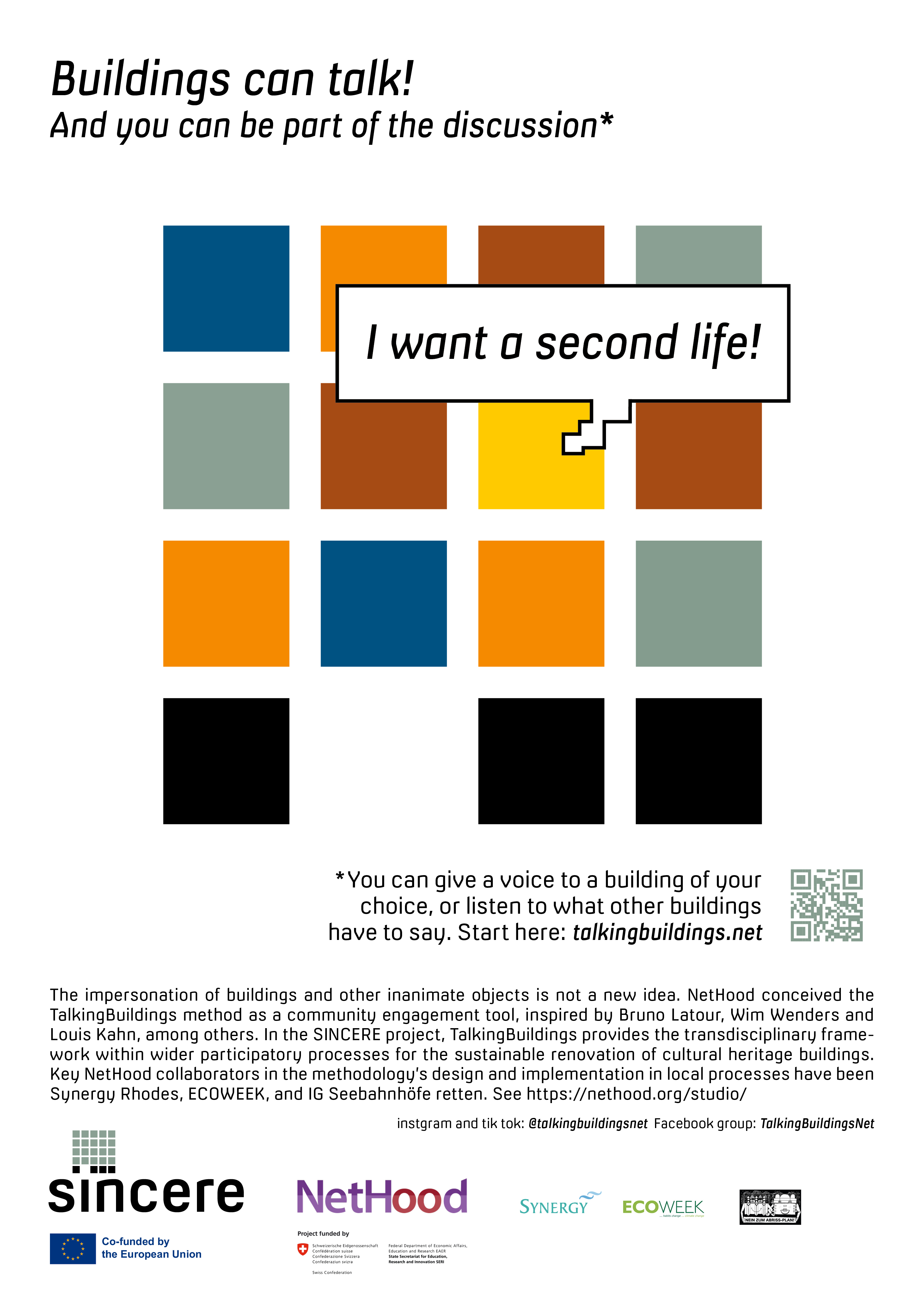
The SINCERE project develops innovative renovation materials and technologies, experimenting with a wide range of low CO2 restoration mortars trying to balance a set of trade-offs regarding their thermal conductivity, compressive strength, cost, permeability, reversibility, recyclability, workability, and self-healing capacity, among others. Although finding the right balance between all these qualities is at its core a technical task, making the final decisions on the right combination of materials to be applied for a specific renovation project highly depends on the local context and the role of citizen participation in the process can be very useful. To meaningfully engage citizens in such a complex task, the SINCERE project introduces an innovative citizen science methodology, the Talking Buildings Game, a process of incremental engagement with a building based on the idea of impersonation of non-human entities, drawing inspiration from Bruno Latour’s Actor-Network-Theory.
M.H. Nofalah, L. Kyriakou, J.M. Fernández, Í. Navarro-Blasco and J.I. Álvarez. (2025). The Durability of Vaterite Calcined Clay Repairing Mortars: Another Sustainability Aspect in Innovative Low-CO2 Materials, Book of extended abstracts, pp. 639-642, HMC 2025 – 7th Historic Mortars Conference, 2-4 September 2025, Padova, Italy.
This study aims to address this knowledge gap by investigating VC3’s durability relative to LC3 and OPC. Experimental mortar samples were prepared, including a reference OPC mortar and mortars where calcite was progressively replaced by vaterite at increments of 0%, 5%, 10%, and 15%. The materials’ performance was evaluated based on key parameters: mechanical strength, capillary water absorption, and sulfate resistance. This comprehensive evaluation provides insights into the long-term behavior of VC3, contributing valuable data towards advancing sustainable cement technologies and addressing both environmental and structural challenges.
E. Çam, L. Kyriakou, J.M. Fernández, Í. Navarro-Blasco and J.I. Álvarez. (2025). Enhancing the Properties of Lime Mortars with Volcanic Ash and Hemp Shiv: A Sustainable Approach for Restoration Applications, Book of extended abstracts, pp. 371-374, HMC 2025 – 7th Historic Mortars Conference, 2-4 September 2025, Padova, Italy.
This study aims to investigate the effects of volcanic ash and hemp shiv additions on the fresh and hardened properties of air lime and natural hydraulic lime mortars, highlighting their suitability for sustainable and heritage-compatible restoration applications.
A. Rubio-Aguinaga, L. Kyriakou, J.M. Fernández, Í. Navarro-Blasco and J.I. Álvarez. (2025). Impact of microencapsulated PCMs on lime mortars: thermal and durability assessment, Book of extended abstracts, pp. 631-634, HMC 2025 – 7th Historic Mortars Conference, 2-4 September 2025, Padova, Italy.
This study evaluates the performance of lime mortars integrated with microencapsulated PCMs, aiming to establish them as a viable solution for sustainable, durable, and resilient building materials.
L. Kyriakou, R. Haik, A. Peled, E. Tziviloglou, I. Karatasios, J.M. Fernández, Í. Navarro-Blasco and J.I. Álvarez. (2025). Lime-based Mortars for Thermal Retrofitting of Historic Buildings – Key Challenges for Field Application, Book of extended abstracts, pp. 643-646, HMC 2025 – 7th Historic Mortars Conference, 2-4 September 2025, Padova, Italy.
This research supports the broader goal of integrating innovative building materials into heritage conservation strategies, ensuring that interventions are compatible to the original fabric of historic buildings and do not accelerate substrate degradation or disrupt historical aesthetics.
M.H. Nofalah, L. Kyriakou, J.M. Fernández, Í. Navarro-Blasco and J.I. Álvarez. (2025). The Influence of Metakaolin to Vaterite Ratio on the Properties of Vaterite Calcined Clay Cement: Microstructure, and Mechanical Performance. , ICSBM 2025 – 4th International Conference on Sustainable Building Materials, 10-13 August 2025, Eindhoven, The Netherlands.
This study examines Vaterite Calcined Clay Cement (VC3) as a sustainable binder, focusing on how the metakaolin-to-vaterite (MK/V) ratio influences workability, microstructure, and mechanical properties. By addressing this gap, this research contributes to optimizing VC3 formulations and advancing low-carbon cement technology.
E. Çam, L. Kyriakou, J.M. Fernández, Í. Navarro-Blasco and J.I. Álvarez.(2025). Investigating the Influence of Hemp Shiv Size on Air Lime-Based Mortars for Sustainable Restoration Applications. , ICSBM 2025 – 4th International Conference on Sustainable Building Materials, 10-13 August 2025, Eindhoven, The Netherlands.
Lime mortars are preferred in conservation work for their compatibility with heritage buildings. However, enhancing the performance of lime mortars while maintaining their compatibility and sustainability remains a challenge. The incorporation of natural reinforcements, such as hemp, specifically its woody core known as hemp shiv (a by-product of hemp fibre harvesting) offers a promising solution. Characterized by low density, low thermal conductivity, and high-water absorption capacity, hemp shiv is advantageous for sustainable construction applications. This study evaluates the effects of hemp shiv sizes as reinforcement in air lime-based mortars for restoration. Unlike their widespread use in hempcrete, in this study hemp shives are used in smaller quantities similar to the incorporation of fibres into mortars, facilitating targeted improvements in mechanical strength, thermal properties, and workability without significantly altering mortar’s density or texture.
A. Rubio-Aguinaga, L. Kyriakou, J.M. Fernández, Í. Navarro-Blasco and J.I. Álvarez. (2025). Silica-Supported Form-Stable Phase Change Materials for Enhancing Thermal Performance in Lime Mortars. , ICSBM 2025 – 4th International Conference on Sustainable Building Materials, 10-13 August 2025, Eindhoven, The Netherlands.
As concerns about sustainability and energy efficiency in the construction sector grow, lime-based mortars present a promising alternative due to their lower carbon footprint compared to conventional mineral binders. These mortars are not only environmentally friendly but also highly compatible with heritage conservation, making them ideal for the restoration of historical buildings. This study investigates the incorporation of form-stable phase change materials (PCMs), specifically silica-supported PCMs, into lime mortars to improve their thermal performance, enhancing both energy efficiency and thermal comfort. PCMs absorb and release heat during phase transitions, reducing the need for active climate control systems and enhancing building thermal efficiency. The use of form-stable, silica-supported PCMs helps prevent material leakage during thermal cycling, ensuring greater long-term stability and reliability. This study focuses on the mechanical, thermal, and microstructural properties of lime-based mortars with silica-supported PCMs to assess their potential for improving energy efficiency and sustainability in construction applications.
E. Batziou, N. I. Dourvas, K. Ioannidis, S. Diplaris, S. Vrochidis, I. Kompatsiaris. (2025). Digital Twin Development for Cultural Heritage Buildings: A Multimodal Approach to Simulating Energy Performance, in Proceedings of the ISIM Workshop at ACM IMX 2025, ACM, 2025.
Cultural heritage buildings represent invaluable historical and architectural assets, but their preservation often conflicts with the need for modern energy efficiency. This paper presents a novel framework for digital twin development that adopts a multimodal approach to provide an open-source environment of a CH building with the goal to simulate and optimize energy performance in heritage structures. By integrating diverse data modalities, such as structural analysis, environmental monitoring, and multimedia documentation, the proposed digital twin provides a comprehensive, dynamic representation of the building’s energy behavior. This approach enables more accurate simulations of energy performance, facilitating informed decision-making for sustainable retrofitting while respecting the unique constraints of cultural heritage conservation. The application of this framework in a real case study demonstrates the potential of multimodal digital twins to bridge the gap between preservation and energy efficiency, to increase immersiveness and to highlight their role in advancing sustainable management practices for heritage sites. The findings underscore the transformative potential of digital twin technology in fostering sustainable, data-driven solutions for cultural heritage conservation.
A. Vassiliades, A. I. Karageorgiadis, E. Batziou, S. Diplaris, E. A. Stathopoulos, N. Dourvas, K. Ioannidis, S. Vrochidis, I. Kompatsiaris. (2025). Optimizing Carbon Footprint & Energy Performance for the Sustainability of Historic Buildings using Knowledge Graphs & Digital Twins., in Proceedings of the 3rd Ιnternational Workshop on Knowledge Graphs for Sustainability (KG4S), Portoroz, Slovenia, June 1-2, 2025.
Cultural heritage preservation is crucial for climate resilience and sustainable development, requiring innovative tools, materials, and adaptive renovation to mitigate climate risks, reduce emissions, and enhance sustainability in line with the EU Green Deal and UN Sustainable Development Goals. This paper presents ongoing work integrating Knowledge Graphs, Digital Twins, and Building Information Modeling (BIM) to optimize the carbon footprint and energy performance of historic buildings through innovative restoration materials, energy harvesting technologies, and socially-driven approaches, aligning with net-zero-carbon goals. We propose a pipeline where a Digital Twin, incorporating a BIM model, simulates a historic building’s virtual representation to evaluate how different materials impact energy consumption and sustainability. The Knowledge Graph stores historical, real-time (sensor-based), and predicted weather data, enabling the Digital Twin to assess weather-driven energy performance variations and determine optimal material choices. As part of the EU-funded SINCERE project, this system provides a data-driven decision-making framework for stakeholders, supporting restoration, operation, and long-term sustainability planning for Built Cultural Heritage.
M.H. Nofalah, L. Kyriakou, J.M. Fernández, Í. Navarro-Blasco and J.I. Álvarez, (2025). The use of Vaterite in Calcined Clay Cement Binders for Sustainable Production. CEES 2025 – 3rd International Conference on Construction, Energy, Environment and Sustainability, 11-13 June 2025, Bari, Italy.
E. Tziviloglou, C. Stentoumis, J. I. Alvarez, E. Stathopoulos, S.Diplaris, A. Sfetsos, D. Vlachogiannis and I. Karatasios. (2024). Resilient and adaptive renovation of 20th century buildings towards net-zero carbon built heritage – The approach of SINCERE research project. MONUBASIN 2024 .
SINCERE is European collaborative research project, which highlights the significance of Built Cultural Heritage and develops a variety of tools to minimize its carbon footprint and enhances the energy efficiency in historical buildings, through the use of innovative, sustainable, and cost-effective restoration materials, energy harvesting technologies, ICT tools, and socially innovative approaches (Fig.1). The project employs a multi-scale approach, addressing material, building, neighborhood, and city levels, focusing on the structure, external envelope, and transparent elements of buildings. SINCERE offers a range of sustainable restoration options evaluated through Digital Twin (DT) tools tailored to the needs of historical buildings. This enables the selection of optimal solutions for structural and thermal retrofitting, and the planning of necessary adaptation measures for addressing the climate change challenges and enhancing energy efficiency.
Christos Stentoumis, Minas Katsiokalis, Panagiotis Bikiris, Nikos Karantakis. (2024). Engineering a BIM-based mixed reality application for the life-cycle management of buildings. XR SALENTO 2024.
Building stock is a significant capital for every society and signifies its prosperity, while, on the other hand, it has a significant life␂cycle cost for its design, construction, operation, and demolition or reno␂vation phases. Simultaneously, buildings have a huge environmental im␂pact because of the energy and natural resource consumption involved in construction and operation. Hence, efficient life-cycle building manage␂ment is important to reduce resource usage and improve human comfort. Building information modelling (BIM) has gradually gained attention in recent decades and is widely considered a key to digitising and optimis␂ing the building life cycle. Yet, there are important challenges in the standardisation of methodologies, interoperability of solutions and data exchange, as well as the usability of BIM-related solutions. Moreover, modern or renovated buildings produce extensive real-time data on top of the static data organised in BIM. It is commonly accepted that most professionals in the field do not have access to the critical static or dy␂namic data that accompany a building project. In this research and in␂novation work, we propose an approach for openness and interoperability of building data across the different phases of a building’s life cycle via a BIM-based mixed reality platform.
A. Rubio-Aguinaga, J.M. Fernández, I. Navarro-Blasco and J.I. Alvarez. (2024). Green Way of Improving the Thermal Efficiency of Mortars by the Addition of Biobased Phase Change Materials. In Proceedings of P.B. Lourenço, M. Azenha and J.M. Pereira (Eds.) "SUBLime Conference 2024 - Towards the Next Generation of Sustainable Masonry Systems: Mortars, Renders, Plasters and Other Challenges”. MATEC Web Conf. 403 03007 (2024). Funchal, Madeira, Portugal, November, 2024.
The thermal efficiency of air lime-based mortars was improved by directly integrating varying amounts (5 wt. %, 10 wt. %, and 20 wt. %) of a microencapsulated biobased phase change material (PCM) into the fresh mortars. This PCM is made of vegetable oils and other organic wastes from the agri-food sector. The mortar formulation was optimized by adding different chemical additives and mineral admixtures. The mortar formulation was meticulously designed to produce rendering mortars that are easily workable, crack-free, and fully adherent for use in building envelopes. Positive outcomes in thermal efficiency tests have demonstrated the ability of these materials to store thermal latent energy, offering an environmentally friendly alternative to enhance the thermal comfort of building inhabitants.
A. Rubio-Aguinaga, L. Kyriakou, J.M. Fernández, Í. Navarro-Blasco and J.I. Alvarez. (2024). Optimized Phase Change Material-Enhanced Lime Renders for Energy-Efficient Building Envelopes: Thermal and Durability Characterization. 3rd International Conference on Green Construction (ICGC2024) Córdoba, Spain, 21-24/10/2024. Oral Presentation.
Posters
P. Antoniadis The Building Stories Platform. Cultural heritage buildings in dialogue, for sustainable preservation and use, Conference on Cultural Heritage and New Technologies (CHNT), 3-5 November, 2025, Vienna, Austria.
E. Çam, L. Kyriakou, J.M. Fernández, Í. Navarro-Blasco and J.I. Álvarez. (2025). Optimizing the Use of Basalt Fiber in Lime-Based Mortars for Heritage Applications, , poster, HMC 2025 – 7th Historic Mortars Conference, 2-4 September 2025, Padova, Italy.
E. Çam, L. Kyriakou, J.M. Fernández, I. Navarro-Blasco and J.I. Alvarez. (2024). Optimization of Air Lime Concrete and Air Lime-based Ternary Mixtures with Sustainable Additives for Enhanced Performance in Heritage Buildings. 3rd International Conference on Green Construction (ICGC2024) Córdoba, Spain, 21-24/10/2024. Poster Presentation.
M.H. Nofalah, L. Kyriakou, A. Rubio-Aguinaga, J.M. Fernández, Í. Navarro-Blasco and J.I. Alvarez. (2024). Veterite Calcined Clay Cement (VC3) as a Low-Carbon Solution. 3rd International Conference on Green Construction (ICGC2024) Córdoba, Spain, 21-24/10/2024. Poster Presentation.